
Rwanda travel requirements
Visa access
On arrival for all nationalities
Passport
Check validity and a blank page
Health
Yellow-fever rules follow your route
Last reviewed
7 September 2026
Use this page to prepare, not as an entry guarantee. Immigration, airline and health rules can change. Verify the final itinerary and passport category through the official links before paying or flying.
01 — At the border
Open entry does not mean identical entry
Rwanda grants visas on arrival to nationals of every country, but that headline is only the start. Passport groups can receive different fee waivers and stay periods; the purpose of the trip can change the visa class; and a regional itinerary can make the East Africa Tourist Visa worth comparing.
Bring a coherent travel story
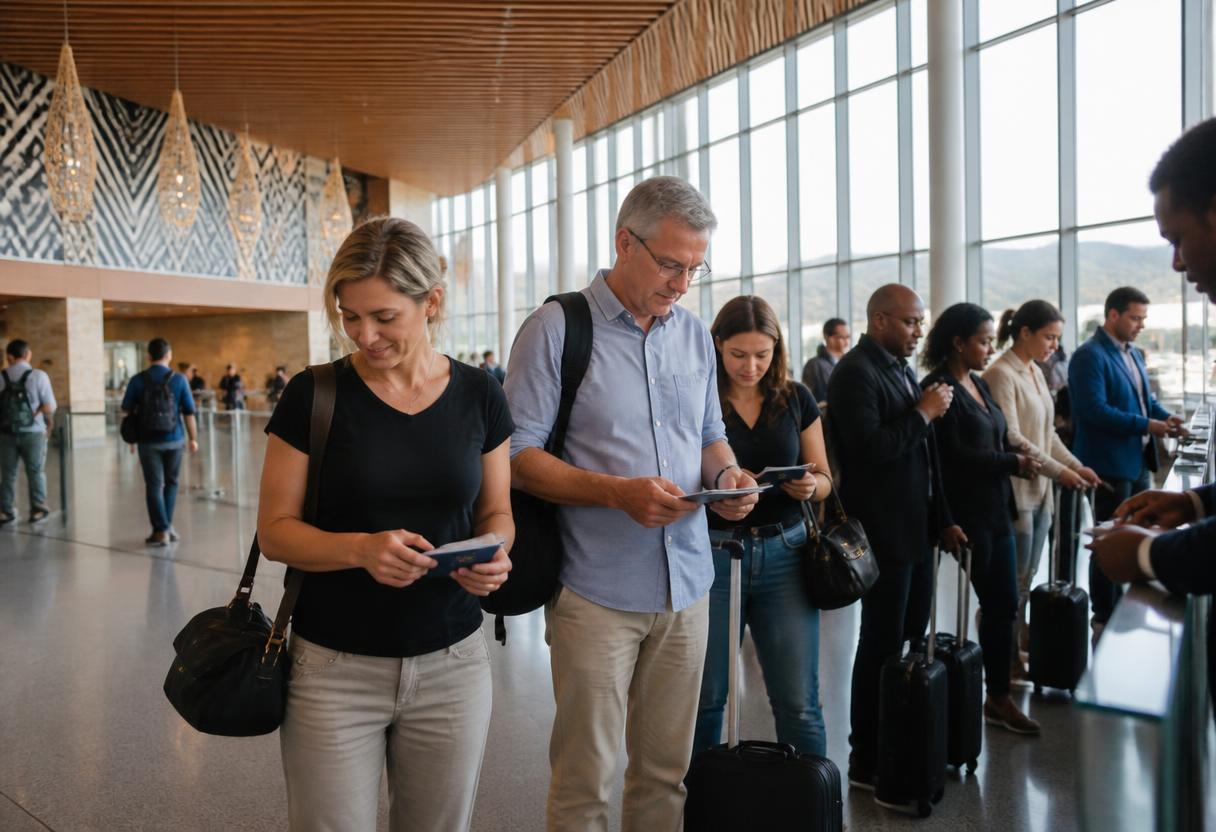
A valid passport, a usable blank page, first-night address, onward or return plan, and access to funds answer most routine arrival questions. Keep them together, even when copies also live on your phone.
Apply ahead when the visit is not simple tourism
Work, study, residence, conferences, long stays and multi-country plans deserve an advance check. An arrival visa does not authorise every activity.
Planning tool 01
Build your entry path
Choose the broad details of your visit. This gives you a preparation path—not a decision on whether you will be admitted.
Your preparation path
- Visa on arrival is generally available, but the current visa class and fee depend on the visit and length of stay.
- Keep a passport with adequate validity and a blank page, your first-night address, and evidence of onward travel together.
- Keep documents in hand luggage and allow time for the arrivals desk.

02 — Health documents
Your route matters as much as your destination
Yellow-fever checks are driven by where you have been and how you transited, not simply by the word “Rwanda” on the ticket. Review every connection and carry the original certificate when your route triggers the requirement.
A screenshot may rescue a reservation. It may not replace a health certificate at a border desk.
Arrange routine travel-health advice early, especially for malaria prevention, trekking, rural travel, pregnancy, long stays or prescription medication. Insurance should name the activities you plan and include medical evacuation where appropriate.
Planning tool 02
Yellow-fever transit check
Route needs checking
Check every country on the ticket—including connections—against the current WHO risk list. The airline or a travel clinic can help interpret a complex transit.
Check current WHO guidancePlanning tool 03
Your document checklist
Progress stays on this device. Print a clean copy when the list is ready.
0 of 8 prepared
03 — Money, bags and connection
The small arrival details that slow people down
Payment options at the border can change, so arrive with a working card and a backup. Avoid relying on old fee figures copied across blogs: match the amount to the official visa class immediately before travel.
Pack without disposable plastic
Single-use plastic carrier bags are restricted. Use reusable packing cubes, fabric bags or durable travel pouches instead.
Keep identification close
A local SIM is registered to identification. You may need the passport again after immigration, not at the bottom of a locked case.

Planning tool 04
Arrival, in the right order
01
Before departure
Save official approvals and your first-night address offline. Put originals—not checked luggage—within reach.
02
At the border
Present the passport and requested health document. Confirm the visa class, allowed stay and receipt before leaving the desk.
03
First hour
Collect luggage, remove prohibited plastic packaging, use an authorised cash point or exchange counter, then arrange a registered taxi or pickup.
04
First day
Register a local SIM with identification, keep small franc notes, and reconfirm the next transfer or hotel collection.
04 — Source desk
Check the rule setter, not the rumour
Fees, exemption lists and health-risk countries are the details most likely to date. These are the first places our editors check.
05 — Quick answers
Questions travellers ask before check-in
Can every nationality obtain a visa on arrival in Rwanda?
Rwanda's immigration authority states that nationals of all countries can receive a visa on arrival at Kigali International Airport and land borders. The fee, permitted stay and exemption category can differ, so verify your passport category before departure.
Should I apply online even if visa on arrival is available?
It is usually optional for a straightforward holiday visit, but advance approval can be useful for groups, business or conference travel, longer stays, tight connections, or travellers who prefer written confirmation before flying.
When is a yellow-fever certificate checked?
It may be required when arriving from, or after certain transits through, a country with yellow-fever transmission risk. Routing and transit time matter. Check the current risk-country list and official advice for your exact journey.
Can I use the East Africa Tourist Visa for Rwanda, Kenya and Uganda?
The joint visa is designed for tourism across those three countries. Apply through the country you will enter first and confirm its current conditions before paying; it does not cover work or every type of visit.
What happens to plastic bags at the border?
Single-use plastic carrier bags are restricted and may be removed from luggage. Repack toiletries and loose items in reusable fabric, paper or durable transparent travel pouches before departure.
Need a local expert to sense-check your trip?
Share your dates, route and travel style. We’ll connect you with a licensed Rwandan operator for permits, transfers and itinerary support.