
Shoot Rwanda the right way
Permits, drones, locations, sensitivities and the field craft of working here — a practical magazine for photographers, vloggers and film crews coming to Rwanda.
Independent editorial guide · Confirm rules with authorities before you fly
Commercial photography and filming require permits, and news media needs accreditation. Tourist snapshots do not. Plan the paperwork before the flight.
Drone clearance and filming permits are not same-day errands. Apply before you travel — especially for anything involving parks or drones.
Rwanda uses 230V power with European-style plugs. Bring adapters and spare batteries; rural charging can be unreliable.
MTN and Airtel 4G covers most of the country, including many rural areas. Buy a SIM on arrival with your passport — it is cheap and fast.
Permits, accreditation and what counts as commercial
Rwanda is one of Africa's easiest countries to work in — if your paperwork is in order. The distinction that matters is tourist versus working: holiday snapshots need nothing, but anything commercial, broadcast or journalistic crosses into permit territory.
Commercial filming and professional photography require a permit, typically coordinated through the Rwanda Development Board, and the process starts well before you land. Describe your project honestly: what you are filming, where, for how long, and how it will be published. Fees scale with the scope — a wedding video and a documentary series are different conversations.
Journalists and documentary crews should arrange press accreditation through the relevant media authorities before arrival. Bring letters of assignment, a list of equipment with serial numbers, and passport copies. Equipment clearing at the airport is painless when your gear list matches your permit application, and painful when it doesn't.
Permits inside the national parks are handled separately by the parks' authorities, and they are strictly enforced. Filming gorillas, chimpanzees or any commercial work in Volcanoes, Nyungwe or Akagera requires park-specific permission on top of visitor permits — start this one the earliest, as it is the slowest.
The practical rhythm: apply several weeks ahead, keep every approval in a single folder you can show at checkpoints, and carry copies. Rangers, police and district officers do ask, and a printed permit turns a potential stop into a handshake.
Permit fees vary widely with project scope and location — from modest fees for small commercial shoots to significant daily rates for documentaries. Get a written quote from the authorities before budgeting.
Rules and contact points change. Confirm current requirements with the Rwanda Development Board and, for parks, the park authorities directly before you commit to dates.
Drones: the rules that actually matter
Rwanda's drone rules are stricter than many creators expect — and better enforced than most. The country treats airspace seriously, and a drone that arrives without clearance will not leave the airport with you.
Bringing a drone into Rwanda requires advance authorisation: you register the flight with the civil aviation authority before travel, and clearance is granted case by case. Do not simply pack the drone and hope — it will be held at customs, and recovery takes days.
Working with a licensed local drone operator is the pragmatic alternative many productions choose. Local pilots already hold the registrations, know the no-fly zones, and can often get you the same aerials faster than flying your own kit in. Ask production fixers in Kigali; rates are reasonable by international standards.
Where you may fly is as important as whether you may import. Airports and the city centre are sensitive, and the national parks are effectively off-limits for private drones — wildlife aerials are granted through separate, supervised arrangements. Flying near government buildings, the airport approach corridors or over crowds without clearance is treated as a security matter, not a paperwork slip.
If aerials are central to your project, budget time and money for the aviation clearance or the local operator, and write the drone plan into your permit application so the two approvals tell the same story.
Licensed local drone operators typically charge day rates that compare well with hiring your own clearance costs, delays and a confiscated drone. Get quotes from Kigali production fixers.
Drone regulations are revised periodically and enforced strictly. Confirm the current process with the civil aviation authority or a Kigali fixer before booking flights.
Kigali's photogenic side and the road beyond
Rwanda photographs beautifully because it is visually dense: a clean hill-city capital, terraced agriculture, volcanic silhouettes and people who, in most places, are happy to be seen. The work is knowing where light, access and courtesy align.
In Kigali, the dependable anchors are the Car Free Zone and city centre for street life, Kimironko and Nyabugogo markets for colour and commerce, Mount Kigali for sunset cityscapes, and the Nyandungu wetland park for greenery inside the city. Rooftop bars around Nyarutarama and Kimihurura give evening skylines without permits.
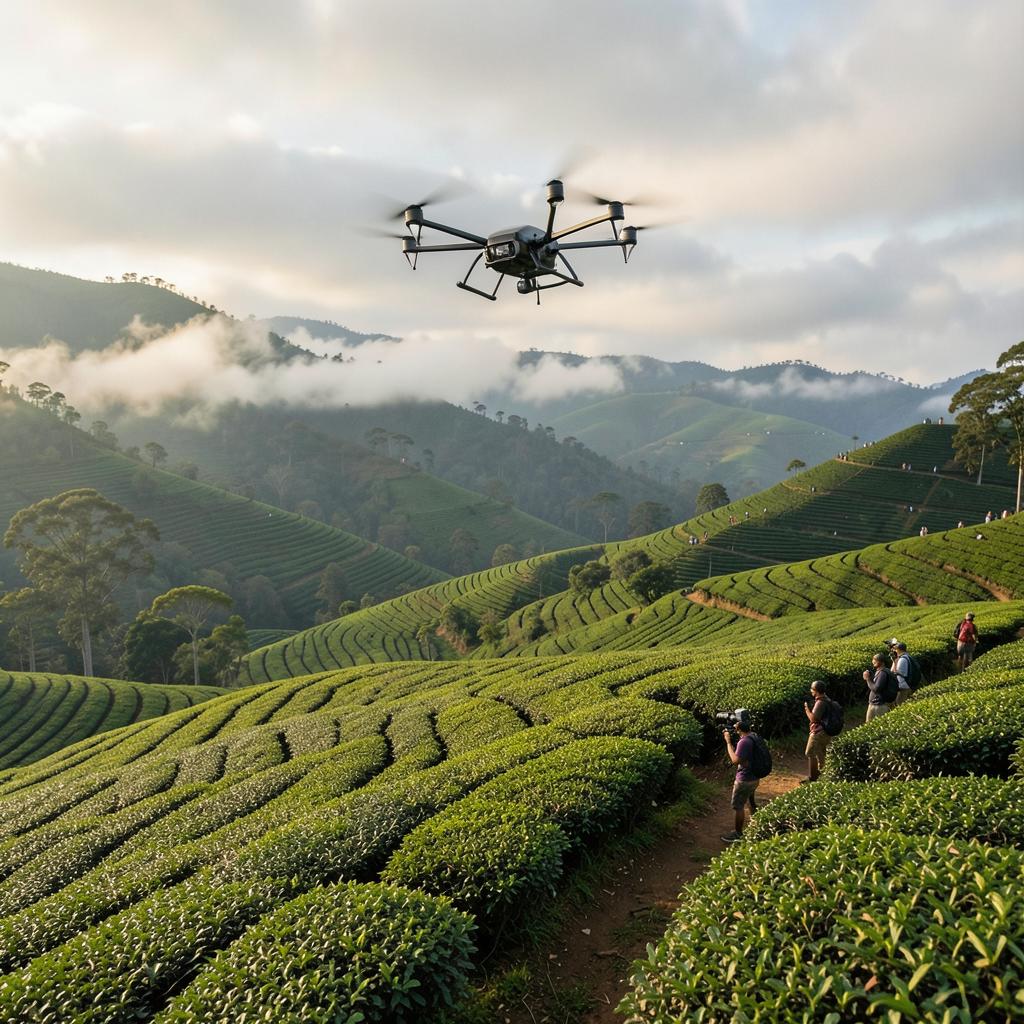
Upcountry, the classics earn their reputation: the tea hills around Nyungwe, Lake Kivu's fishing boats at Karongi and Rubavu, the terraces of the north, and the savannah-and-mountain backdrops of Akagera. The roads are good by regional standards — a 4x4 with a driver doubles as a mobile base.
Golden hours are short and reliable. Kigali sits almost exactly on the equator, so the sun rises and sets near 6am and 6pm year-round — plan shoot days around two tight windows and use midday for interviews, markets and interiors.
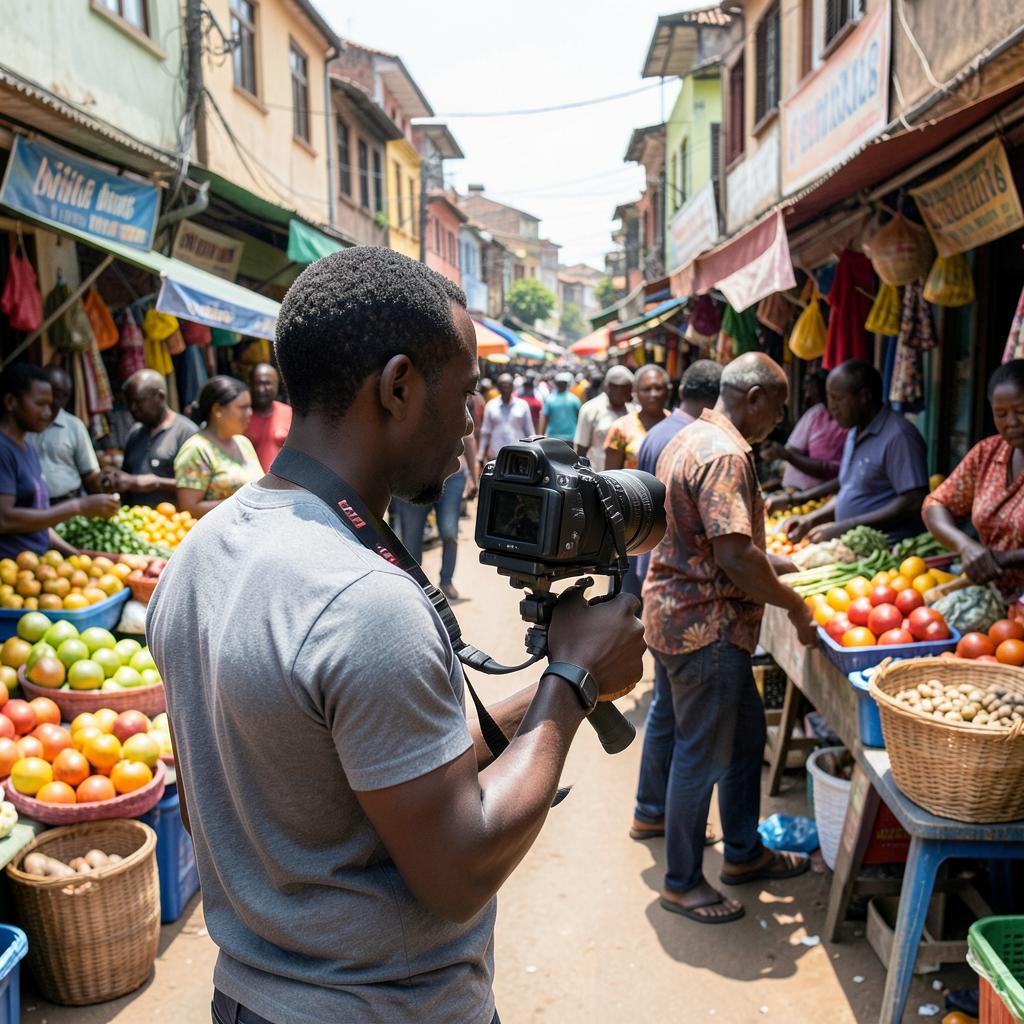
Markets and workshops deserve a word of care: greet the person in charge before the camera comes out, buy something, and you will be waved into scenes no permit produces. A photo printed and sent back to a shopkeeper costs almost nothing and buys the next creator's welcome.
Moto-taxis and ride-hailing cover most Kigali locations cheaply. A 4x4 with driver for upcountry days is the main line item — budget for it and for the park entry fees if you are filming inside protected areas.
Photography around government buildings, borders, airports and military sites is prohibited and taken seriously. When in doubt, do not point the camera.
Filming wildlife and photographing people with respect
Two sensitivities define what you can and should shoot in Rwanda: the protected wildlife, and the people who lived through the country's hardest chapter. Both are handled the same way — through rules and respect rather than improvisation.
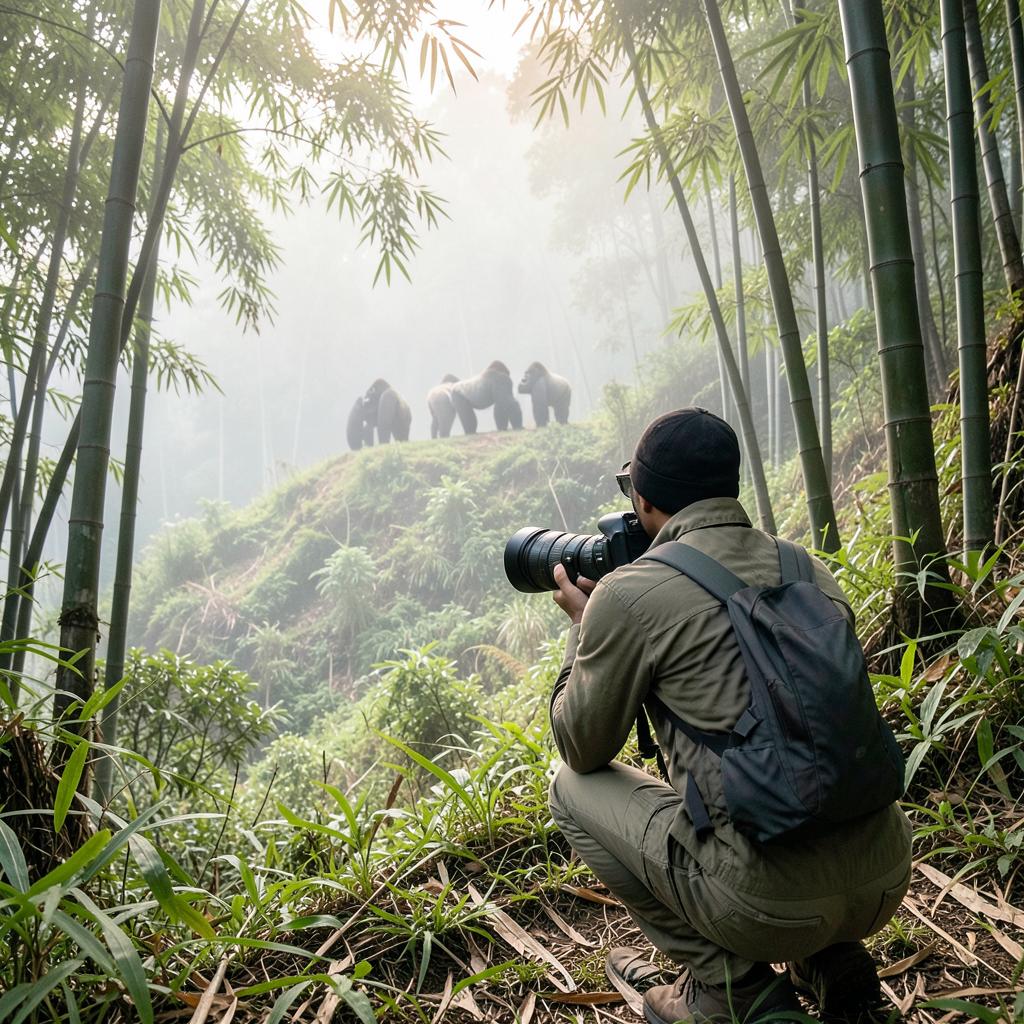
Wildlife filming runs through the park authorities. Trekking to see gorillas or chimpanzees is a tourist permit; filming them commercially is a separate, expensive permission with its own conditions, and rangers supervise every minute on the ground. Never assume a tourist permit covers commercial work — the difference is enforced at the trailhead.
In the forest itself, the rules are absolute regardless of your permit type: keep the assigned distance, no flash, no retreating if a gorilla approaches — stand still, look down, follow the guide. Time with the family is capped. Plan shots for the single hour you get.
People photography is mostly welcomed in markets, workshops and fields — if you ask. The exception every visitor must understand is the 1994 genocide against the Tutsi: memorial sites, commemoration events and survivors deserve the same dignity you would want for your own family. Photographing survivors without consent, or treating memorials as content backdrops, is a serious breach — some memorial sites restrict photography entirely.
The flip side is that Rwandans are generally open and proud to be filmed working, farming, dancing or building. Ask, smile, show the screen, and share the photos back where you can. In rural areas, a local guide or fixer who introduces you changes every interaction.
Gorilla trekking permits for visitors are a significant line item (check current RDB pricing), and commercial wildlife filming costs far more and needs lengthy lead time. Budget them separately from travel.
Photography rules at genocide memorials are strict and posted. Follow them exactly; where signs prohibit photography, do not photograph, even for personal use.
Working smart: power, connectivity and the night economy
The gear survival details matter more in Rwanda than the creative ones. Power, data and transport logistics decide whether your shoot days produce footage or stories about the day the batteries died.
Power is 230V with European-style sockets; carry adapters and, for rural work, a power station or car inverter. Load-shedding is rare in Kigali but real upcountry — charge everything at every opportunity and treat the lodge generator schedule as a hard deadline.
Connectivity is a genuine strength. Buy a local SIM with your passport on arrival — MTN and Airtel both offer affordable data bundles with wide 4G coverage, and uploading from most upcountry towns works. For live streaming or heavy uploads, Kigali's hotels and cafés provide the fastest fixed connections.
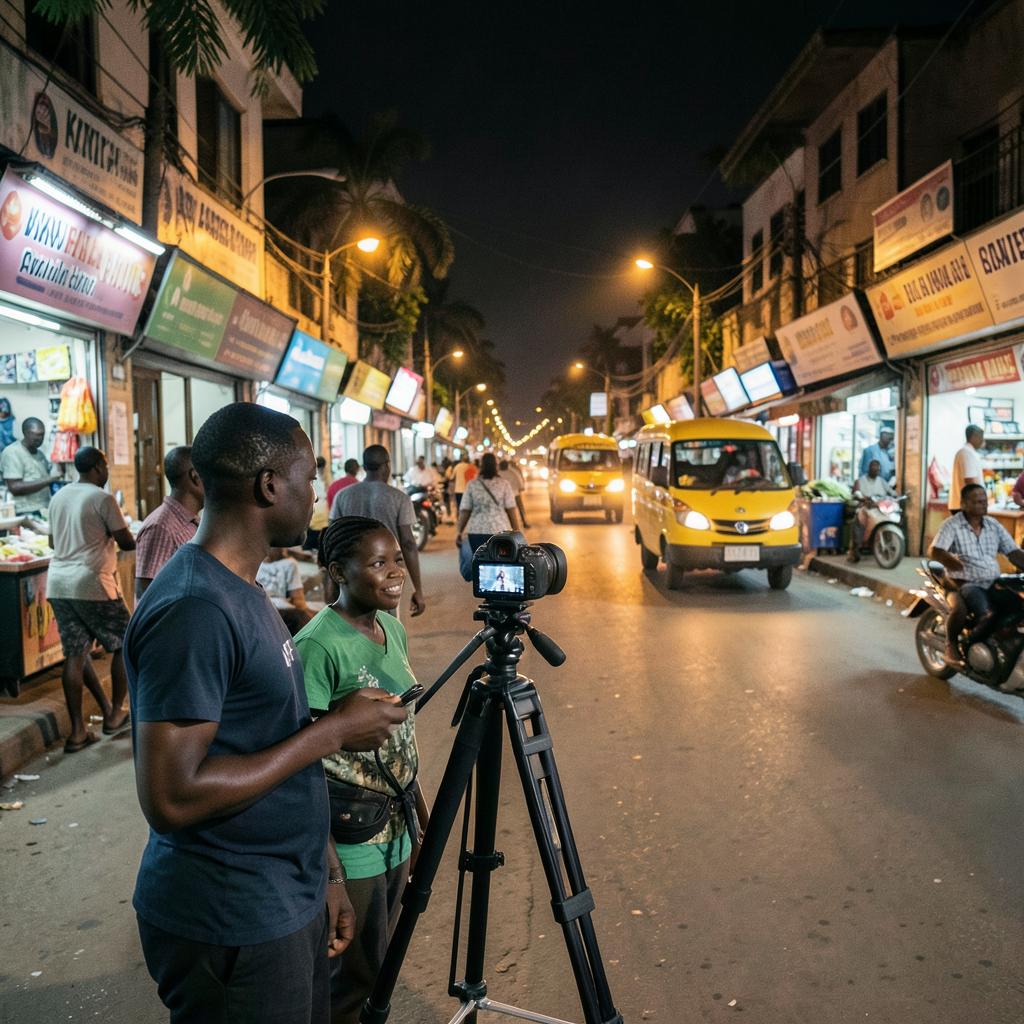
Kigali's night economy is undersold: the Car Free Zone's evening street life, concert nights, rooftop venues and the lit boulevards around the convention centre all shoot well. The city is among Africa's safest after dark, which makes night street work feasible with normal precautions — shoot in twos, agree moto fares first, and keep gear low-key between setups.
Finally, hire locally. Kigali has working fixers, drivers, sound recordists and even drone pilots who cost a fraction of flown-in crew and remove an entire layer of friction — language, checkpoints, negotiating, and knowing which market vendors say yes.
Local data bundles cost a few thousand francs for generous packages. Local crew day rates are modest by international standards — agree scope and overtime in writing the day before.
Cash is still king outside Kigali. Mobile money (MoMo) works widely, but carry small notes for markets, motos and rural locations.
The best shoots in Rwanda are planned twice: once for the light, and once for the paperwork.
Work out your shoot budget
Five chapters and one calculator: tick the crew, vehicles, permits and stays you need, set your shoot days, and get a realistic planning range in francs or dollars.
Budget your shoot days
Indicative planning ranges in Rwandan francs. Get written quotes for anything you commit to — permits especially.
RWF 1,070,000
to RWF 4,350,000
For 5 shoot days with 4 of 6 line items included. International flights, gorilla permits and owned gear are not included.
Rates are indicative and change with season and negotiation. Confirm current figures with local fixers before committing a budget.
Five ways shoots go wrong here
Arriving with a drone unannounced
Drones need advance authorisation and are confiscated at customs without it. Clear it before travel or hire a licensed local pilot.
Assuming a tourist permit covers filming
Park filming is permitted separately and supervised. Rangers enforce the difference at the trailhead.
Booking flights before permits
Park filming and drone clearance are the slowest approvals. Start paperwork first, then book.
Shooting memorials casually
Genocide memorial sites have strict photography rules. Follow them exactly — this is not a place to improvise content.
No cash plan outside Kigali
Cards fail and mobile money needs a local number. Carry small franc notes for markets, motos and rural locations.
Straight answers
Do I need a permit for holiday photos and vlogs?
No. Personal photos and casual vlogging for a small personal audience are treated as tourism. Permits come into play for commercial shoots, brand work, documentaries and anything broadcast.
How long do filming permits take?
Allow several weeks for standard commercial permits, and longer for park filming or drone clearance. Start the process before booking flights.
Can I fly my own drone in Rwanda?
Only with advance authorisation from the civil aviation authority, granted case by case. Many productions hire licensed local pilots instead — often faster and cheaper overall.
Is Rwanda safe for solo creators?
Yes — it is widely regarded as one of Africa's safest countries, with low crime and functioning institutions. Normal precautions apply, especially for gear at night and in crowds.
What's the internet like for uploading footage?
Good. Local SIMs with 4G cover most of the country cheaply, and Kigali hotels and cafés have fast fixed connections for bulk uploads.
Do people mind being filmed?
Most are welcoming when asked. Always ask first, respect a no, and be strictly respectful around genocide memorials and commemoration events.
Creators working in Rwanda
Photographers, videographers, drone pilots, editors and fixers based here. Every profile is checked before it appears — see their work, then contact them directly.
0 listed
Loading the list…
Apply to be listed
Send your details and a link to your work. We review each application and publish the ones we can stand behind.
Planning a shoot in Rwanda?
Tell us the project and the dates — we'll point you at the right fixers, locations and stays.
Creator shoot enquiry
Tell us what you're filming and when — we'll reply with practical suggestions.