Nyungwe Forest National Park

MENYA TRAVEL GUIDE · LAST VERIFIED AUGUST 202618 min read
01At a glance

Where

Rwanda's southwest

From Kigali

About 5–6 hours by road

Nearest towns

Rusizi (Kamembe) & Huye

Ideal length

2–3 nights

Signature walk

Canopy walkway, Igishigishigi trail

Primates

13 species, incl. chimpanzees

Birds

300+ species, many Albertine Rift endemics

Pair with

Lake Kivu or Huye

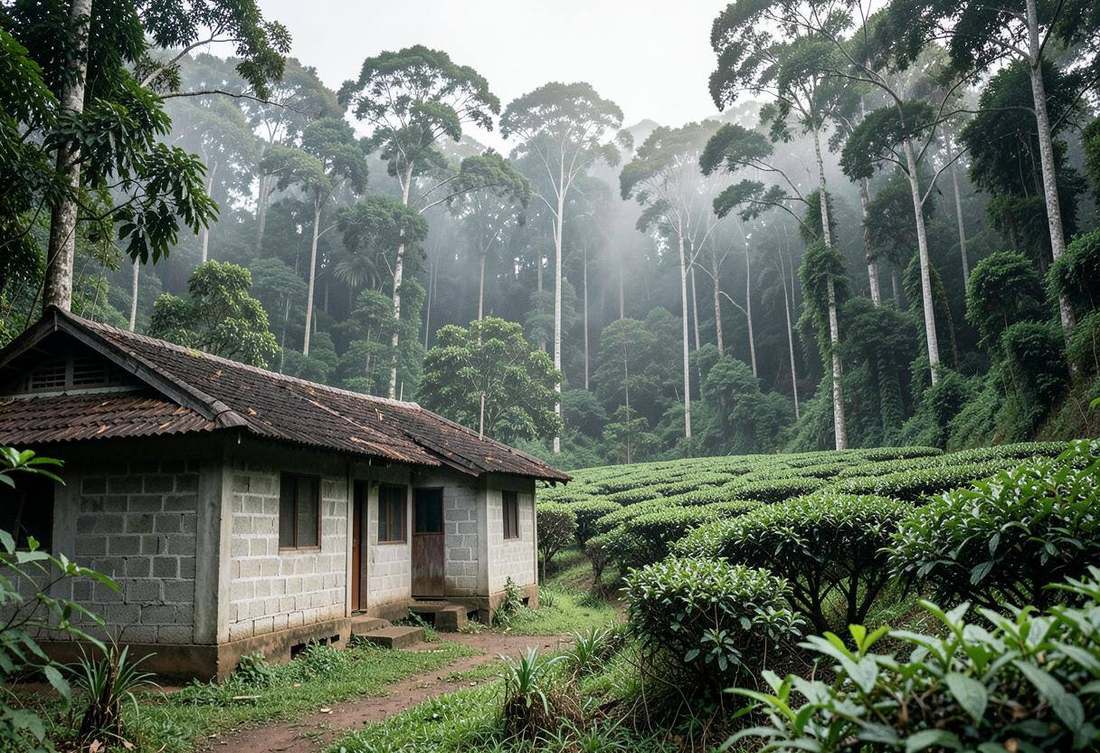
Nyungwe does not announce itself the way a savannah park does. You climb out of the tea estates, the road narrows, and suddenly the light changes: the canopy closes overhead and the temperature drops. Everything is wet, layered and loud — cicadas, distant hornbills, water moving somewhere below the trail.

This is one of the oldest surviving montane rainforests in Africa, a block of green covering the mountains along Rwanda's southwestern border. It escaped the last ice age largely intact, which is why the species list here reads so long: thirteen primates, more than three hundred birds, well over a thousand plants, orchids that grow nowhere else.

Come for the chimpanzees if you like, but plan for the forest itself. The best Nyungwe days are a rhythm of early starts, long muddy walks, hot tea afterwards and long unhurried afternoons watching cloud pour over the ridges from a lodge terrace.

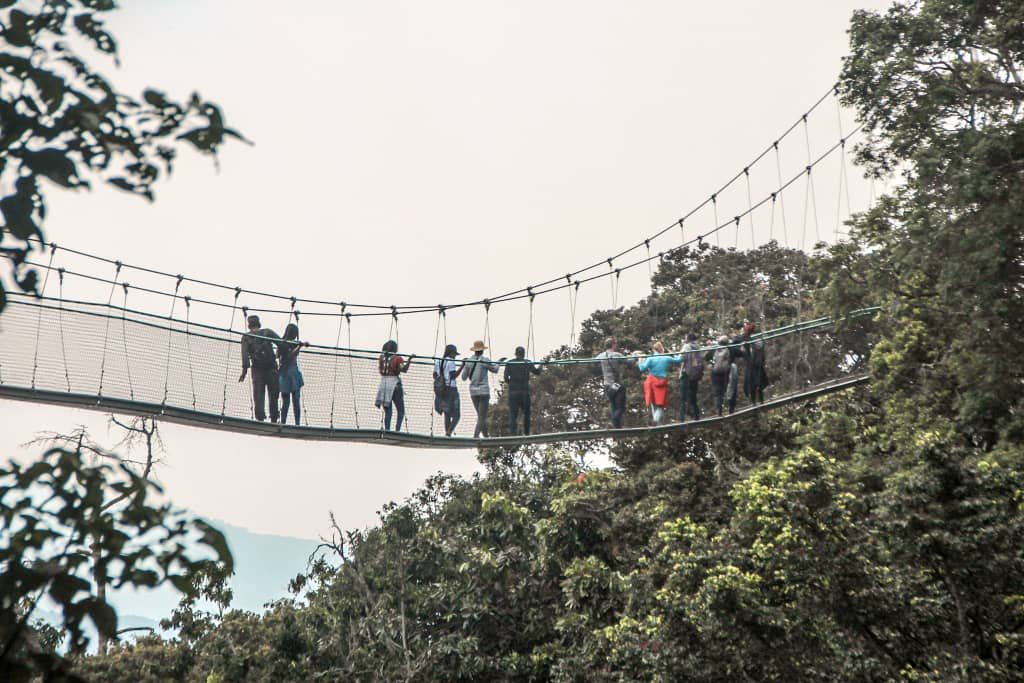
Suspension canopy walkway above misty rainforest treetops
The canopy walkway on the Igishigishigi trail — the park's signature view, and its most photographed.
WhatsApp X Facebook
02The bigger picture

An old forest, not a set piece

Nyungwe is a rainforest experience rather than a wildlife checklist. Sightings are earned on foot, weather governs the day, and the reward is a forest that feels genuinely wild and genuinely old.

The park protects a critical water tower: streams rising here feed both the Congo and the Nile basins, and the forest's condition matters far beyond Rwanda's borders. Since it became a national park in 2005 and came under a long-term management partnership, trails, guiding and visitor facilities have improved steadily while the forest itself stays the priority.

Access is deliberately structured. You walk with a park guide, groups are small, and the trail network — from a one-hour boardwalk to the multi-day Congo–Nile Trail on the park's flank — lets you choose how deep you go. That structure is what keeps a fragile place open to visitors at all.

Trekkers with a ranger guide at a misty rainforest trailhead at dawn
Every activity starts with a park guide, a briefing and an honest conversation about distance.

Before you go

  • Book activities and forest-edge rooms together.
  • Budget a full travel day in each direction.
  • Assume rain and pack for mud, not for photos.
  • Carry cash — card acceptance thins out fast here.
03Ways in

Seven ways to meet Nyungwe

Chimpanzees make the headlines, but the trails, the canopy and the tea country are what people remember. Change the pace and the forest changes with you.

Wild chimpanzee sitting on a mossy branch in misty rainforest

Primates · Chimpanzees

Chimpanzee tracking

3–6 hours, from ~05:00

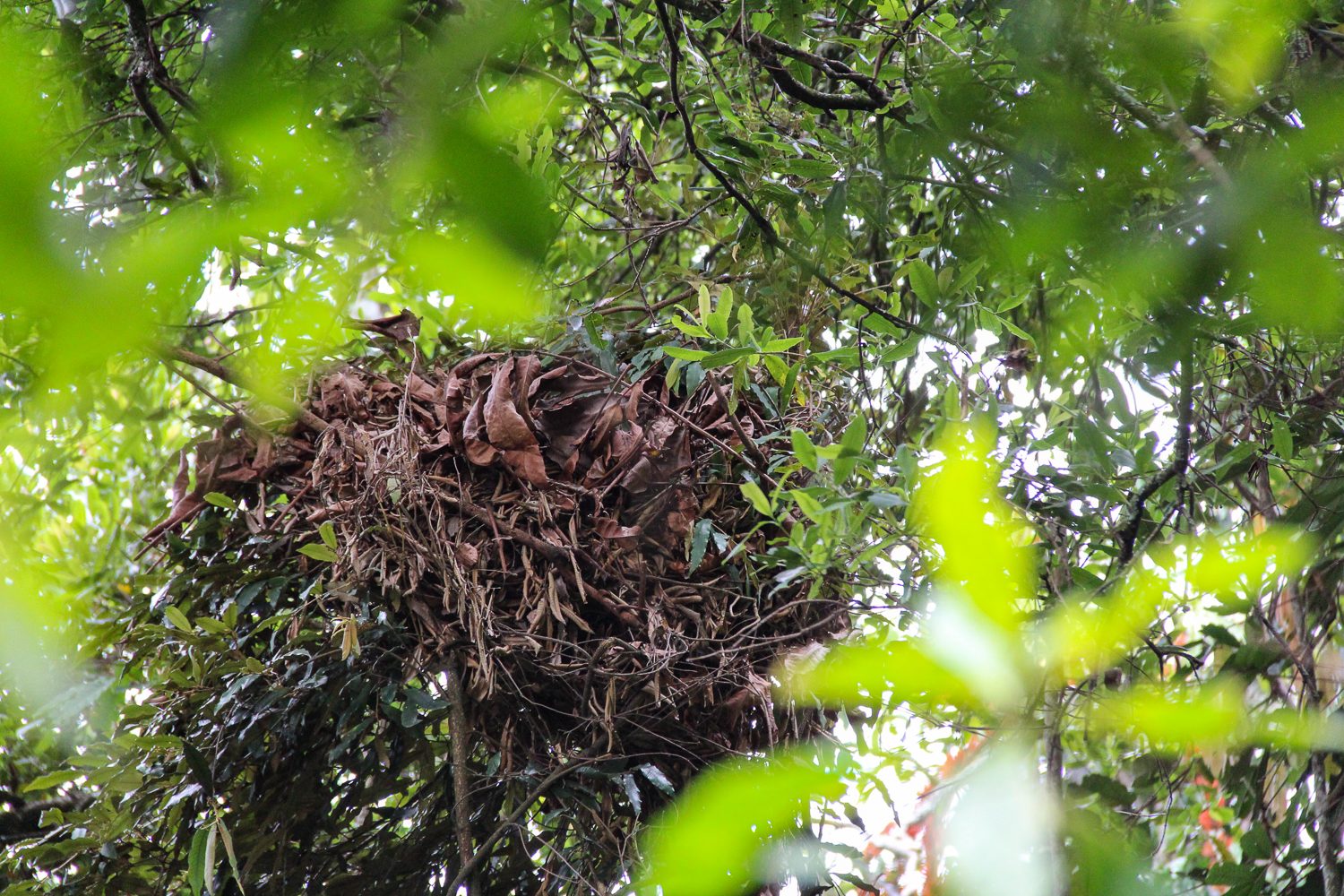
Trackers locate a community at dawn and you follow them in, often off the formal trail and often uphill. Chimps move fast and feed high, so a sighting can be a long look through a gap in the canopy rather than a portrait at eye level. The soundtrack — pant-hoots rolling across a valley — is frequently the best part.

Planning note

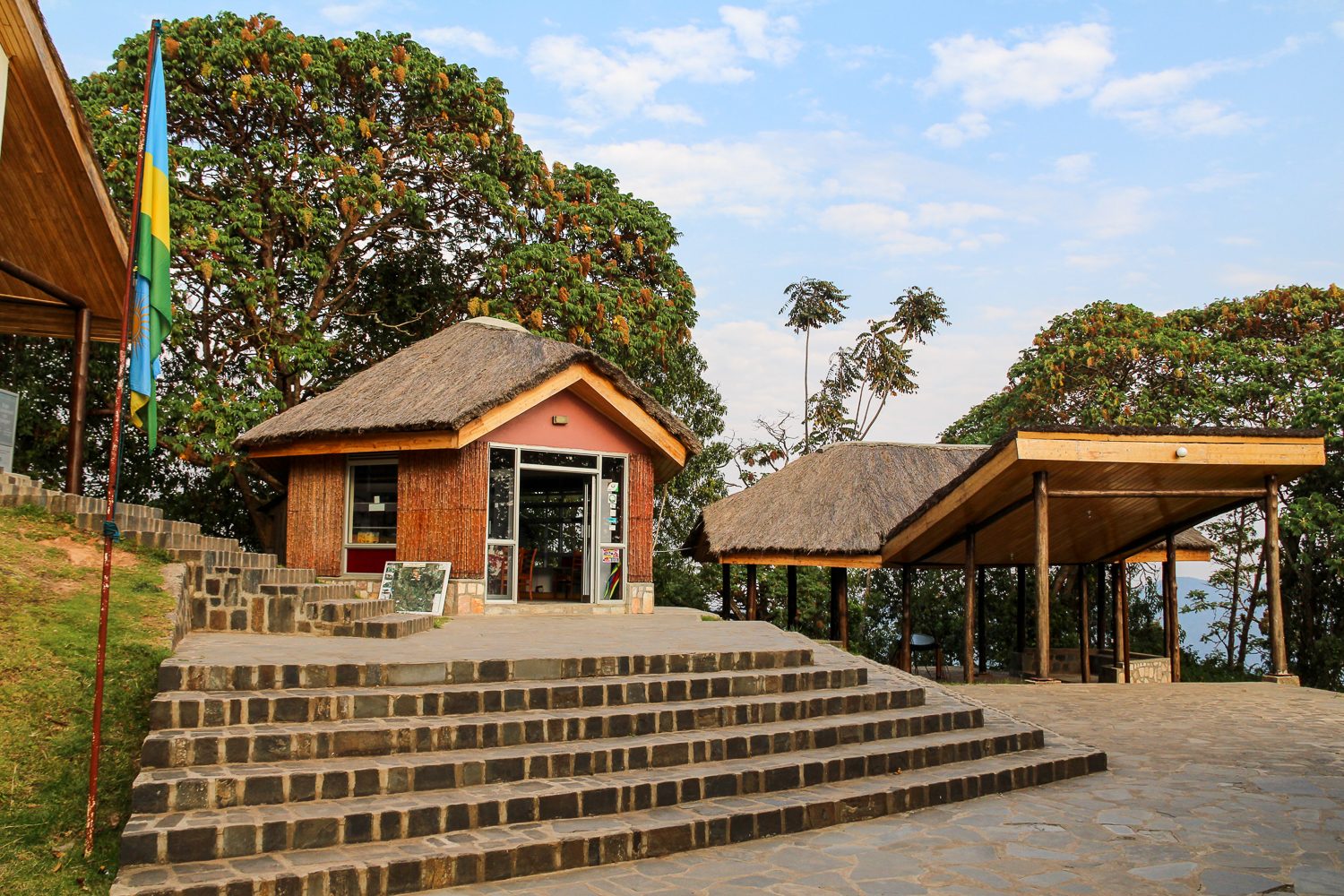
Two groups are habituated, in Cyamudongo and the main forest block. Ask your lodge which sector you are assigned to the night before; Cyamudongo is a separate drive.
Suspension canopy walkway bridge above misty rainforest treetops

Forest views · Canopy walkway

The canopy walkway

About 2 hours

The Igishigishigi trail leads to a suspended steel walkway strung between towers roughly sixty metres above a forested ravine. It sways gently, the mist drifts through beneath your feet, and the perspective on the canopy is one you simply cannot get from the ground.

Planning note

Go on the first slot of the morning. Fewer people, better light, and the cloud is often still sitting in the valley below the bridge.

Black-and-white colobus monkeys leaping through misty rainforest canopy

Primates · Colobus troops

Colobus troop tracking

2–4 hours

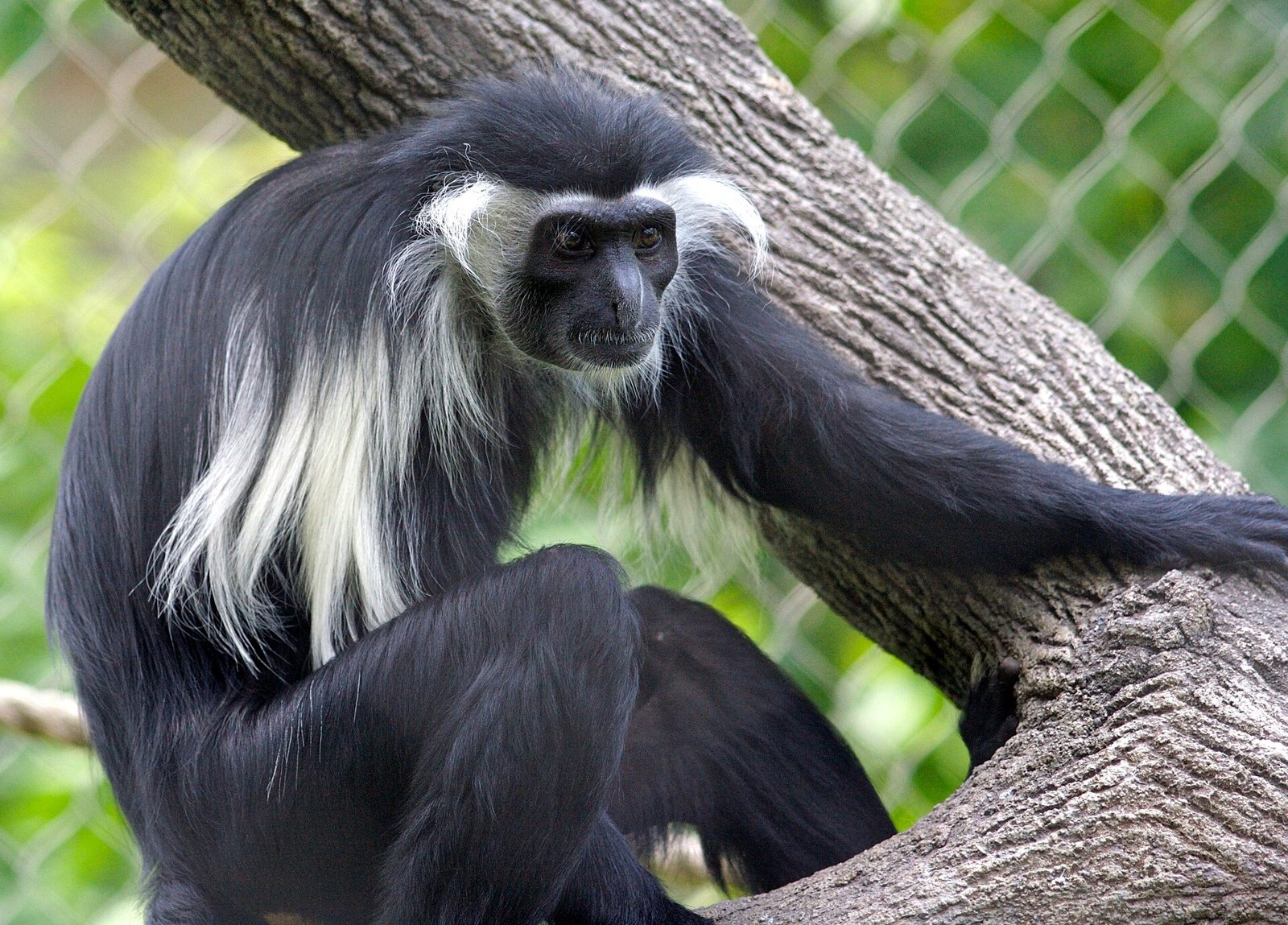
Nyungwe's Angolan colobus supergroups can number in the hundreds — believed to be among the largest arboreal primate troops in Africa. You hear the branches before you see anything, then white tails start pouring through the canopy above the trail.

Planning note

This is the best-value primate walk if a chimp permit is out of budget or your legs need a gentler morning.

Hikers on a muddy forest trail beside a tall rainforest waterfall

Hiking · Waterfalls & trails

Waterfall and forest trails

1–8 hours

Around 130 kilometres of trails fan out from the park's trailheads. The Isumo waterfall trail drops through tea and old forest to a curtain of water; Kamiranzovu crosses a high-altitude marsh; Bigugu climbs to the park's highest point for a view over Lake Kivu on a clear day.

Planning note

Trails are graded. Tell the guide honestly how far you want to walk — a good short trail beats a bad long one in the rain.

Great blue turaco perched in dense green rainforest foliage

Birdwatching · Albertine Rift

Birding the Albertine Rift

Half or full day

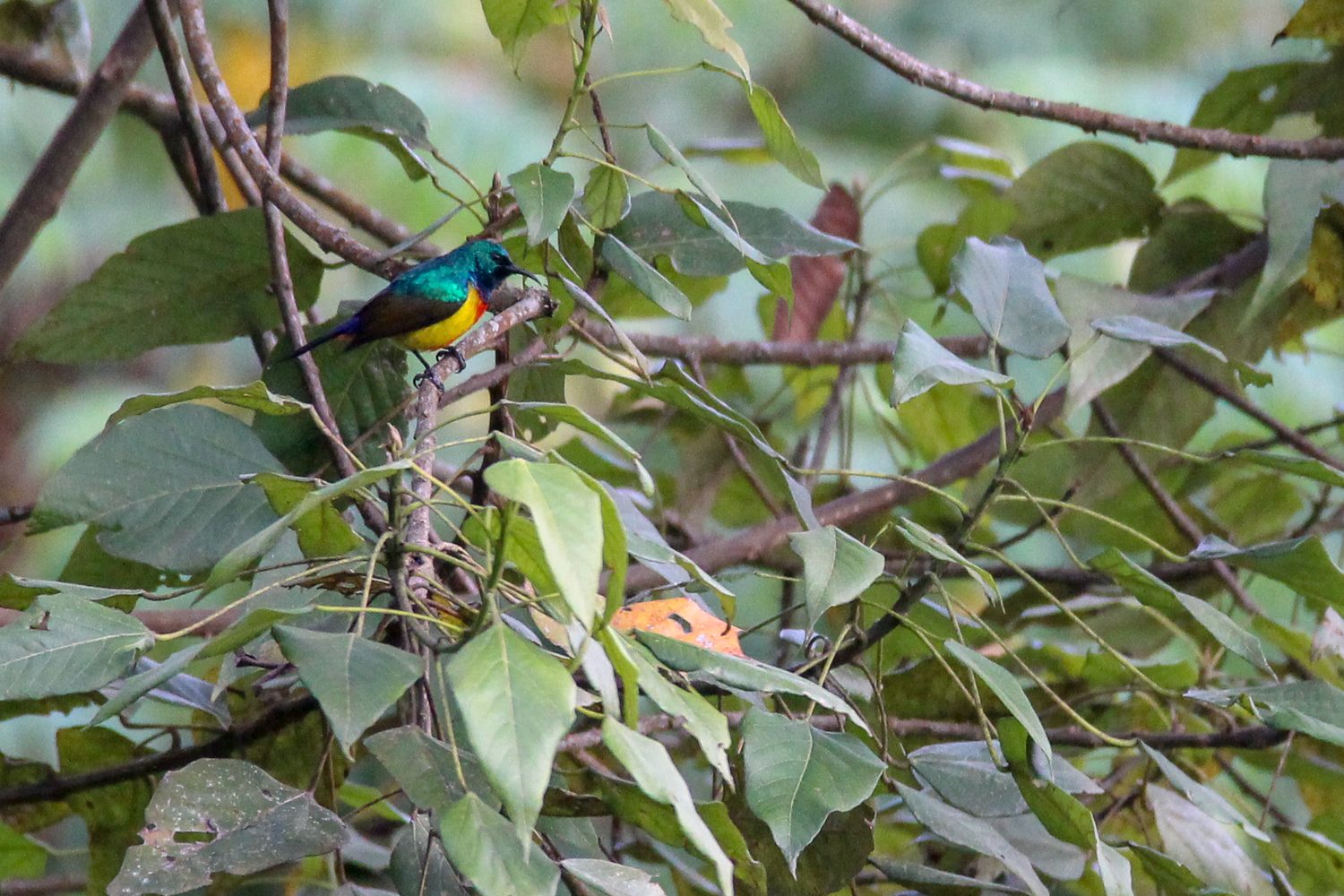
More than three hundred species, including a couple of dozen Albertine Rift endemics, make Nyungwe one of the continent's serious birding destinations. Great blue turacos crash between trees, Rwenzori turacos flash red, and mixed feeding flocks pass through in noisy waves.

Planning note

Hire a specialist bird guide rather than a general one, and start at first light along the main road cutting through the forest.

Tea plantation workers picking on a green hillside beside dense rainforest

Local life · Tea country

Tea estates and Gisakura

2–3 hours

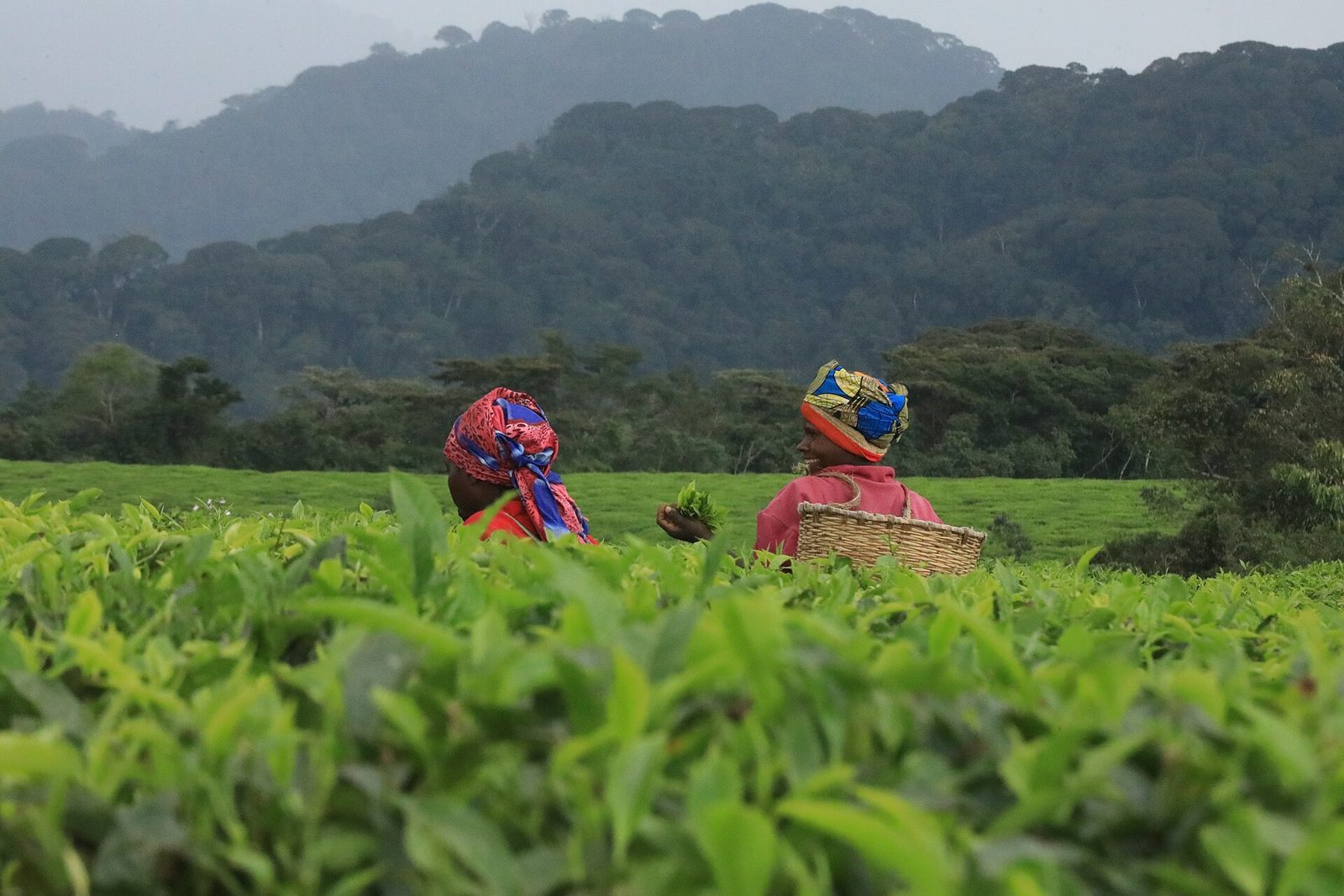
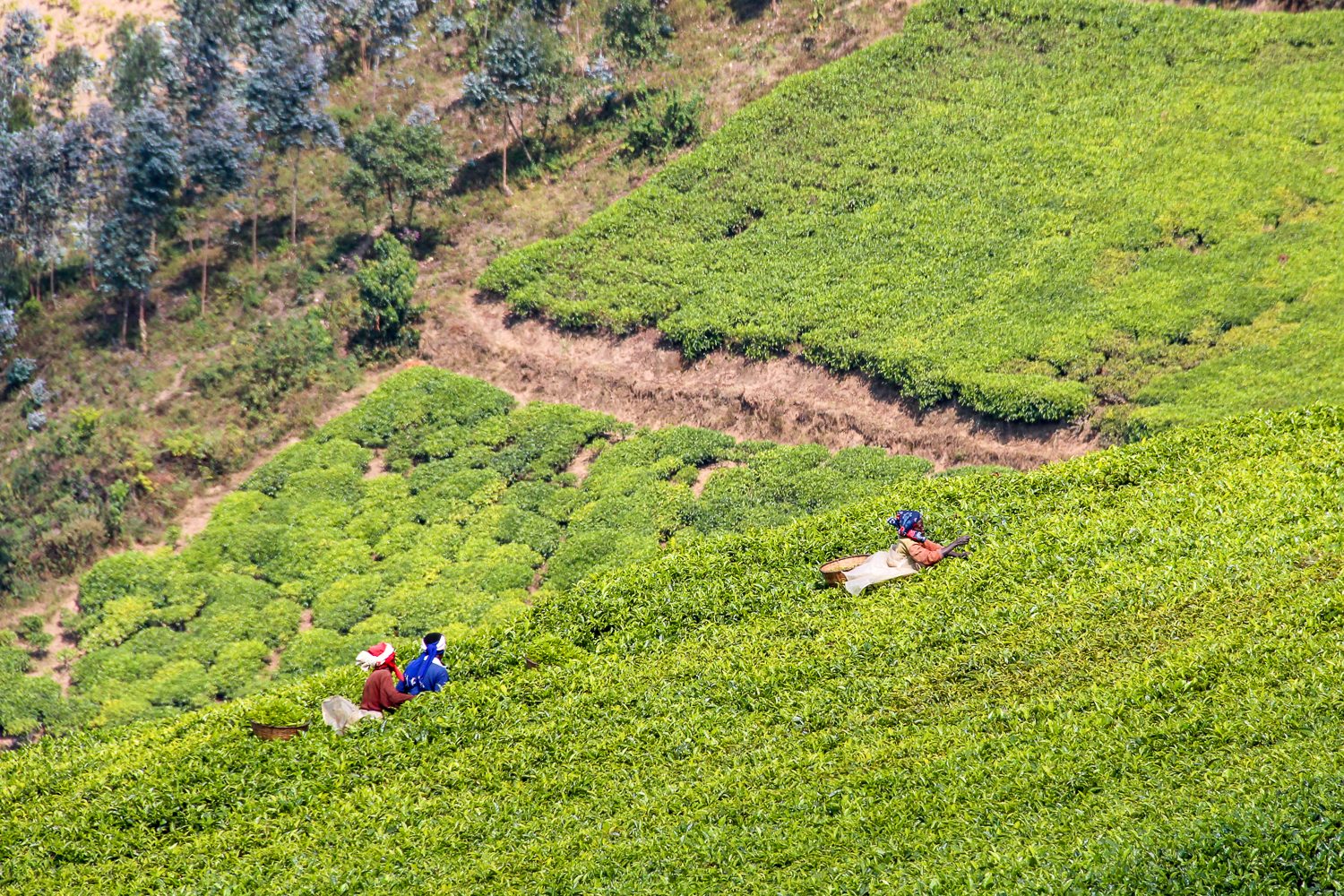
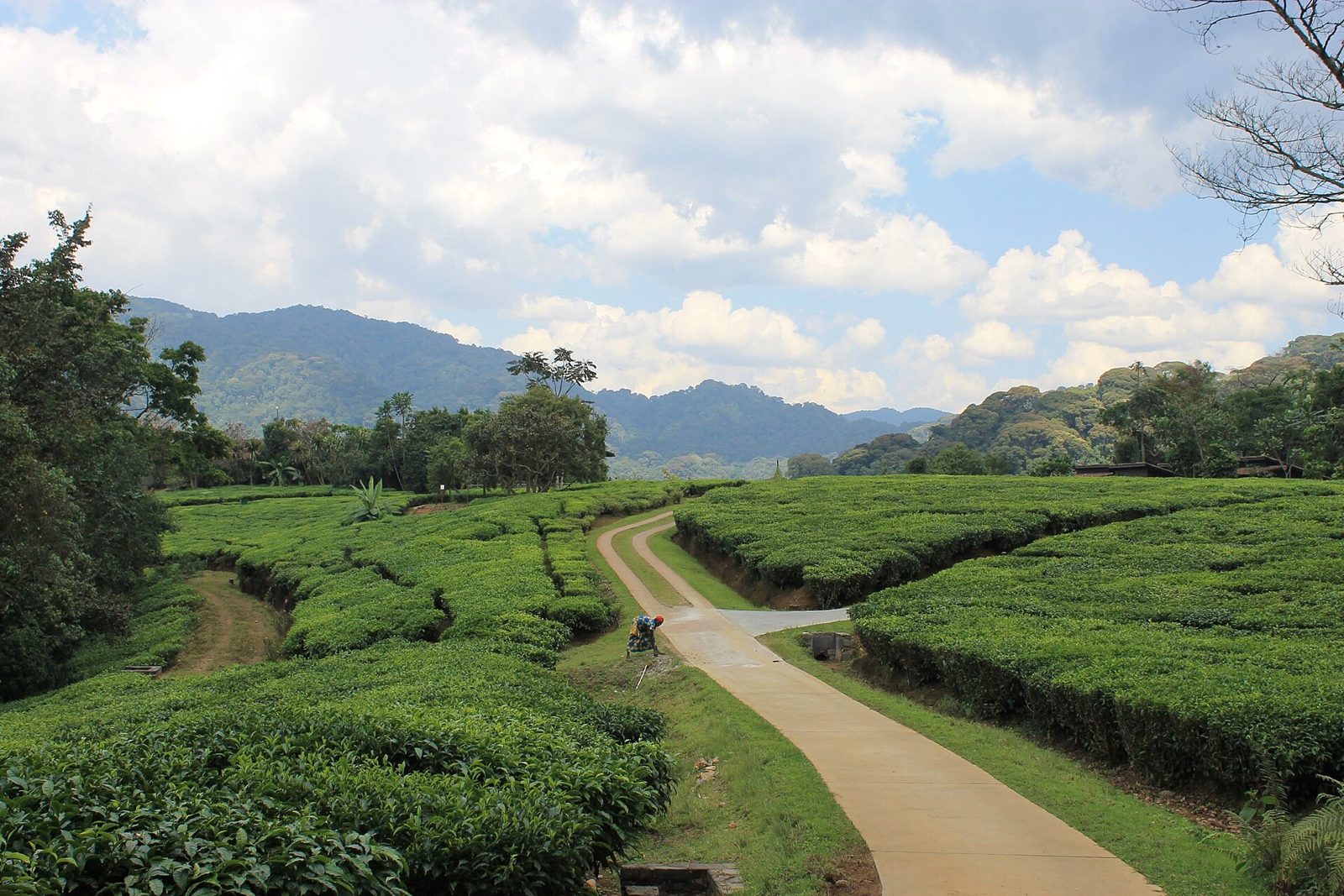
The tea plantations wrapping the park are not just scenery. A factory visit or a walk through the rows explains the economy that lives against the forest boundary, and the small colobus troop in the Gisakura tea estate woodlot is often the easiest primate sighting of the trip.

Planning note

Buy tea locally rather than at the airport. It is fresher, cheaper and the money stays in the region.

Village community members welcoming visitors near the rainforest edge

Community · Culture & crafts

Community and culture

Half day

Cooperatives around the park run craft workshops, honey production, cooking sessions and cultural performances. These visits are how forest tourism becomes worth protecting for the people who live closest to it.

Planning note

Book through your lodge or the park office so the cooperative is paid properly, and ask before photographing anyone.

04Budget

What a Nyungwe trip costs

These are planning ranges in USD, not live quotations. Park entry, activity fees, residency categories, lodge rates and transport all change. Confirm every line with Rwanda's official tourism channels or a licensed operator before paying.

Three nights, a chimpanzee permit, the walkway, one long trail and a shared or private transfer.

  • Chimpanzee tracking planning rangeRates vary by residency category — verify$90–250
  • Park entry, second activity$60–150
  • Private transfer from Kigali$220–420
  • Comfortable lodge, three nights$240–700
  • Meals, guide tips, tea estate visit$90–200
Planning total$700–1,720

Ask for a quote that separates park entry, each activity, vehicle, guide, accommodation and meals — bundled prices hide where your money goes. Last checked: August 2026

05Sleep in the story

Where to stay

Where you sleep decides how early you can start, and dawn is when this forest is at its best.

Wooden eco-lodge cottage with a terrace overlooking misty rainforest

Where to stay · Best located

Forest-edge lodge

Minutes from the trailheads

Staying against the park boundary protects the 05:00 start and gives you the canopy at eye level from your terrace. Look for hot water, drying space for wet kit and a packed breakfast option.

Illustrative stay setting · confirm property photos before booking.

Illustrative Gisakura guesthouse setting

Where to stay · Value

Gisakura guesthouses

Walking distance to the park office

Simple rooms and local meals make Gisakura a practical base for independent travellers arriving by bus. Confirm your assigned activity trailhead and pickup time, and ask about packed breakfast and drying space for wet clothes.

Illustrative stay setting · confirm property photos before booking.

Green tea plantation rows beside rainforest

Where to stay · The view

Tea estate stays

10–30 minutes to trailheads

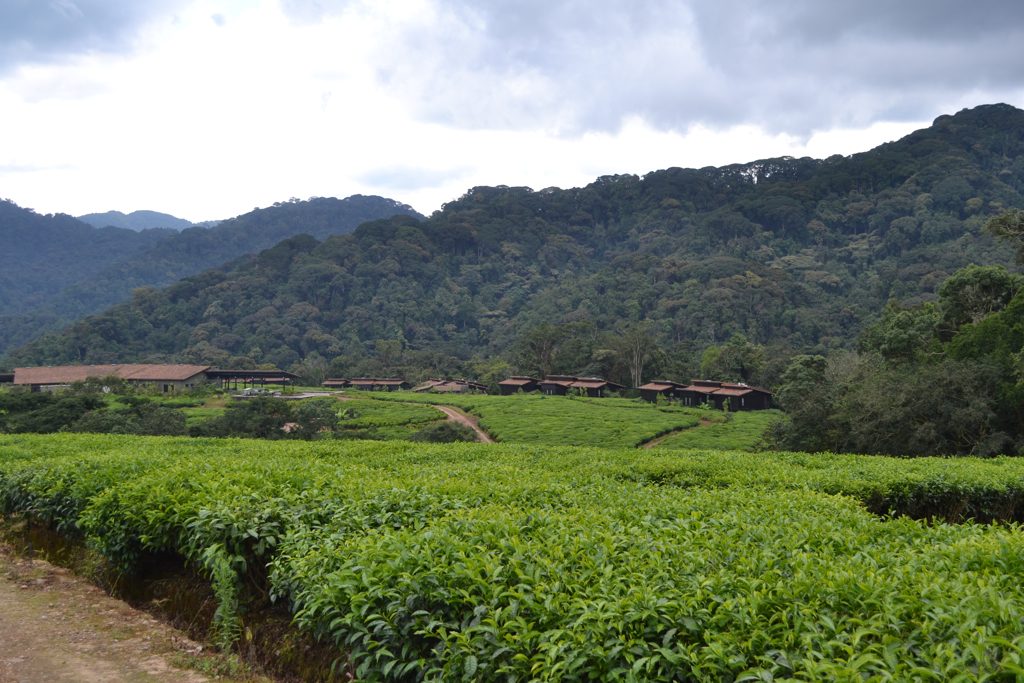
Rooms set among the plantations trade a few minutes of driving for one of the best outlooks in Rwanda, especially at dawn when mist sits in the tea.

Illustrative stay setting · confirm property photos before booking.

Rusizi town and its lakeside setting

Where to stay · Flexible

Rusizi / Kamembe town

About 1–1.5 hours

More rooms, restaurants, a bank and the regional airport. Useful if you are combining Nyungwe with Lake Kivu, but budget the drive into your early start.

Illustrative stay setting · confirm property photos before booking.

Private transfer from Kigali

Roughly 5–6 hours via Huye or via Karongi and the Kivu shore. Both are scenic; the Kivu route is slower but breaks up beautifully with an overnight stop.

Public bus

Coaches run Kigali–Rusizi (Kamembe) daily and pass the park. Ask to be dropped at Gisakura and arrange your lodge pickup in advance — do not plan to arrive after dark.

Fly to Kamembe

A short domestic flight to Kamembe near Rusizi cuts the long drive to about an hour on the ground. Schedules are limited, so confirm before building the trip around it.

Self-drive

The tarmac through the forest is good but winding, with mist, cyclists and trucks. A normal car copes in dry conditions; allow far more time than the distance suggests.

06Timing

Season by season

Nyungwe makes its own weather. Plan for cloud and mud in every month, then be pleasantly surprised.

MonthsTrailsWildlifeNotes
June–SeptemberDriest, firmestChimps can range widelyThe classic window. Book permits and forest-edge rooms early.
October–NovemberWet, slipperyExcellent fruitingShort rains bring fruit, which often brings chimps lower and closer.
December–FebruaryMixedGoodWarm and changeable, with a drier spell around January. Holiday demand rises.
March–MayWettestLush, activeHeavy rain and deep mud. Fewer visitors, greenest forest, best waterfalls.
Hikers on a muddy trail beside a tall rainforest waterfall
The wet months are hard on boots and generous with waterfalls.
07A workable rhythm

The three-night Nyungwe shape

Three nights gives the forest room without turning the long drive into the main event.

Day 1

The drive is the story

Leave Kigali early, break at Huye for the museum and lunch, then climb into the tea country. Arrive at Gisakura in the afternoon, walk the tea-estate woodlot for your first colobus, and sleep early.

Day 2

Chimpanzees at dawn

Meet at the park office before first light and follow the trackers in. Back for a late breakfast, rest through the middle of the day, then take the canopy walkway in the softer afternoon light.

Day 3

Deep into the trails

Choose a longer walk — Isumo waterfall, Kamiranzovu marsh or Bigugu's summit — with a picnic. Finish with a tea factory visit or a cooperative workshop near the park boundary.

Day 4

Out along the lake

Drive north along the Kivu shore to Karongi or Rubavu for a night by the water, or return to Kigali via Huye. Either way, leave time for the viewpoints.

08Field notes

Pack for mud. Walk with the guide.

Small decisions that make a wet, steep, unforgettable day considerably more comfortable.

Colobus monkeys moving through the rainforest canopy
Binoculars matter more here than a long lens: almost everything happens overhead.

For the forest

  • Waterproof hiking boots

    Trails are steep, rooted and muddy in every season.

  • Proper rain shell

    It is a rainforest — showers arrive without warning, even in the dry months.

  • Long sleeves and trousers

    Protection from nettles, safari ants and biting insects.

  • Gaiters or tucked socks

    Safari ant columns cross the trail and find gaps quickly.

For the day

  • Binoculars

    Most primates and nearly all birds are seen high in the canopy.

  • Dry bag for camera gear

    Humidity and rain kill electronics faster than drops do.

  • Water and snacks

    There are no shops on the trails and tracking can run long.

  • Cash in small notes

    For guides, porters, cooperatives and tea purchases.

Keep at least the distance your guide sets from primates

Chimpanzees share our diseases; distance protects them and you.

Do not track if you are unwell

A human respiratory infection can devastate a habituated community.

No flash photography

It startles animals and ruins the encounter for everyone present.

Stay on the trail unless your guide leads you off it

The undergrowth is fragile and the terrain hides steep drops.

Carry out everything you carry in

Nyungwe feeds two of Africa's great river systems; what you drop travels.

Ask before photographing people

Consent is part of travelling well in the communities around the park.

09Conservation

A water tower with monkeys in it

  • Park fees fund ranger patrols, trail maintenance and the anti-poaching work that keeps the forest intact.
  • A share of tourism revenue is directed to communities bordering the park through Rwanda's revenue-sharing programme.
  • Hiring local guides, porters and cooperative services spreads income beyond the park gate.
  • Nyungwe's streams feed both the Congo and Nile basins — protecting this forest is regional water security, not just wildlife policy.
Community members welcoming visitors near the rainforest edge
10FAQ

Questions people ask before booking

Allow five to six hours by road via Huye, or longer if you take the scenic Lake Kivu route. Flying to Kamembe near Rusizi reduces the ground time to about an hour, but schedules are limited.

11Plan it

Plan a Nyungwe rainforest trip

Tell us your dates, party size and what you most want to see. We will pass your enquiry to a licensed Rwandan operator covering the southwest.

We share enquiries only with providers relevant to your request.

12Sources

How this guide is verified

  • Rwanda Development Board — Park entry, activity permits and current visitor guidance
  • Nyungwe National Park management — Trail access, guiding procedures and safety rules
  • Albertine Rift conservation research — Species records, endemism and forest ecology
  • Local operators and lodges — Transfer times, accommodation and seasonal trail conditions

Last checked: August 2026. Fees, activity access, trail conditions and transport schedules can change; confirm before travelling.